The Southern Utah sun is tough on color. A wall that looked fresh at move in can turn pale and powdery within several summers, and light stucco near red soil picks up an orange tint that soap won’t touch. A new coat of paint or elastomeric coating brings the color back and adds a layer between the stucco and the weather.
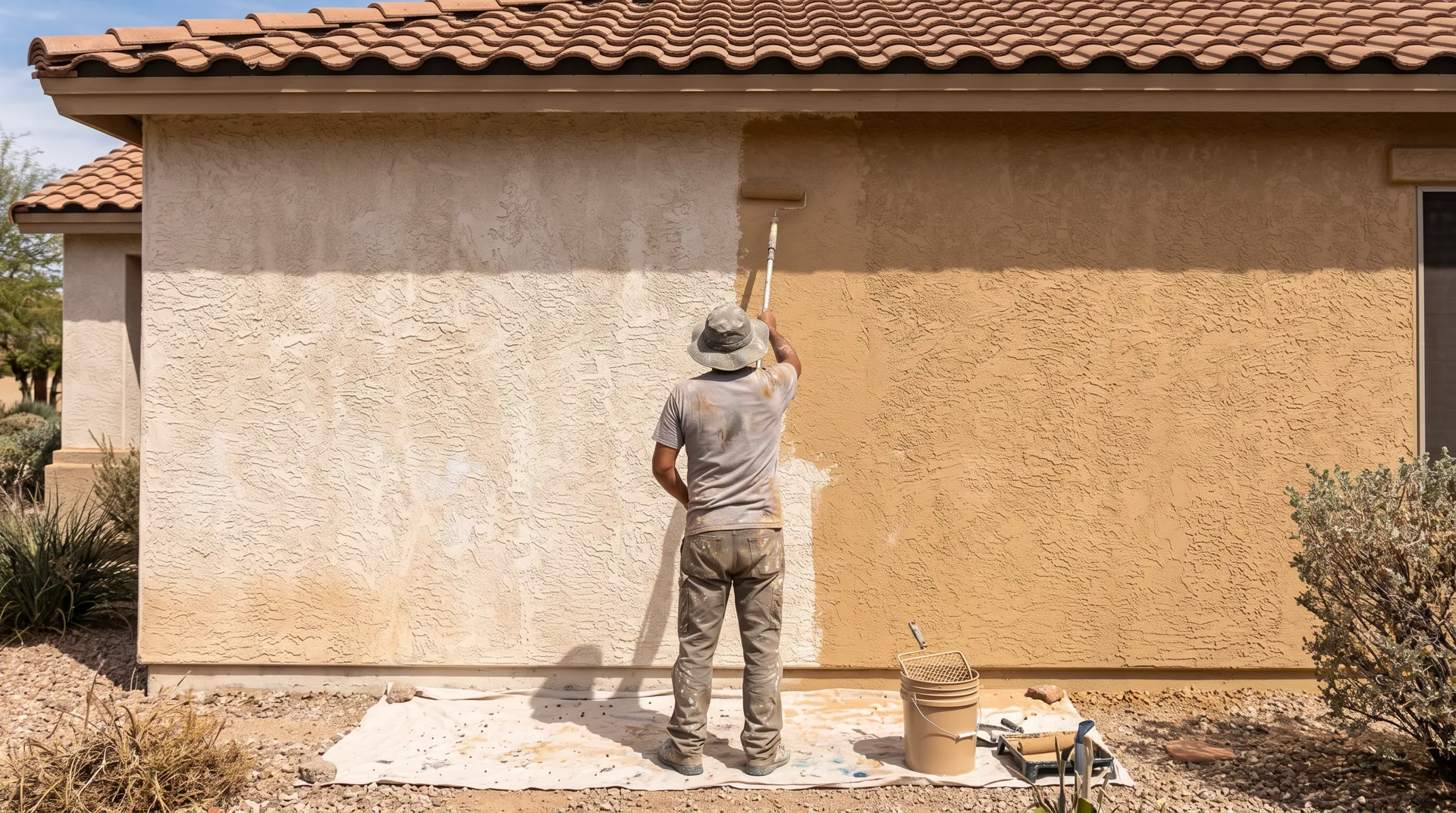
Tell us what you’re seeing and we’ll get a team over for a free written estimate.
Text us a photo at [435 NUMBER]
Signs to look for
Fading
West and south walls noticeably lighter than the sheltered sides, or a color that no longer matches what’s under the eaves.
Chalking
Run your hand across the wall. If it comes away with white or colored powder, the finish is breaking down.
Red dust staining
Orange or pink staining on light stucco, heaviest near the ground, under sprinkler spray and on windward walls after dust storms.
Peeling or blistering
Paint lifting in sheets or bubbling, often a sign of moisture or of paint that wasn’t made for stucco.
Patchy color
Old repairs that show up as lighter or darker squares, or a wall touched up with a slightly different color.
Fine cracks showing through
A web of hairline cracks that makes the wall look tired and lets water into the surface.
What usually causes it in Southern Utah
UV and heat. Strong sun at around 2,800 feet in St. George, and even higher in Cedar City, breaks down pigment and binder in the finish. Summers that often pass 100 degrees speed it along.
Red rock dust. The same red soil that makes the scenery near Snow Canyon State Park and the Red Cliffs National Conservation Area so striking blows onto walls during wind and monsoon storms. It settles into the texture and stains light colors.
Sprinkler overspray. Irrigation water carries minerals and red soil onto the bottom of walls, leaving rings and streaks.
Integral color only. Many stucco homes were finished with color mixed into the final coat and never painted. That color fades unevenly, and there’s no paint layer to refresh.
The wrong product. Standard house paint can trap moisture or peel off stucco. Paint and coatings made for masonry hold up much better.
Elastomeric coating vs paint
Both refresh color. They work differently, and the right choice depends on the wall.
Masonry paint
- Thinner film that lets the wall breathe
- Usually lower cost and easier to repaint later
- A good choice for sound walls with few cracks
Elastomeric coating
- Thick, rubbery film that stretches and bridges hairline cracks
- Sheds wind driven rain well, which helps during monsoon season
- Costs more and is harder to change later, and it can trap moisture if the wall already has a leak
- A good choice for walls with lots of fine cracks once any water problems are fixed
A contractor can look at your wall, check for moisture and recommend one, or a mix such as elastomeric on cracked walls and paint elsewhere.
HOA color rules
Many communities around St. George, Washington and Ivins have approved color palettes and an approval process for exterior changes. Before any coating, it helps to:
- Get the approved color names or codes from your HOA
- Submit any required request before work starts
- Ask the crew for a sample patch on the wall, since colors look different in strong desert light
Choosing a color from the HOA list that hides red dust well can also save you cleaning later.
How the job usually works
- Inspects the walls. The crew checks for cracks, loose areas, moisture and old coatings that may not take new paint.
- Cleans. Walls are washed to remove dust, chalk and staining. Red dust often needs extra cleaning to get out of the texture.
- Repairs first. Cracks are filled and damaged spots patched. See stucco crack repair and stucco repair.
- Masks and protects. Windows, doors, roofing, plants and hardscape are covered.
- Primes as needed. Chalky or patched walls often need a primer so the coating bonds.
- Applies the coating. Paint or elastomeric is sprayed, rolled or both, usually in two coats, at the thickness the product calls for.
- Walks the house. A final check for missed spots and clean edges.
In summer, crews often work early in the day, since very hot walls can make coatings dry too fast.
Cost
National cost guide ranges, not a quote: elastomeric coating or repainting a whole house often runs about $3,000 to $8,000 or more. House size, number of stories, how much repair and cleaning comes first, and paint vs elastomeric all change the price. A single wall or a blend over a recent patch costs less. See the stucco repair cost guide.
When to act
- Soon: peeling, blistering, or chalking heavy enough to coat your hand, and walls with lots of open hairline cracks.
- Before monsoon season: storm facing walls that have lost their coating.
- Before you sell or list a rental: fresh color helps curb appeal.
- Plan around the heat: spring and fall are the easiest times to coat stucco here.
Related help
- Cracks to fix before coating? See stucco crack repair.
- Foam trim that needs refinishing? See EIFS repair.
- In Ivins? See stucco repair in Ivins.
- In Hurricane? See stucco repair in Hurricane.
Stucco painting FAQ
- Can unpainted stucco be painted? Yes. Once it’s painted, though, it will need repainting in future years.
- Will red dust come off? Cleaning helps a lot. Deep staining may only disappear under a new coat.
- How long does a coating last? It varies with the product, sun exposure and prep. Ask the contractor about the product they plan to use.
- Can I pressure wash it myself? Gently. High pressure can damage stucco and push water into cracks.
- How do I check the contractor? Ask for their Utah license number and verify it with DOPL. Painting and plastering fall under S270.
Send a photo of your walls
Text a photo of the house and a close photo of the faded or stained area to [435 NUMBER], or use the free estimate form. Mention your HOA if you have one. We’ll connect you with a local crew for a free written estimate.
Red Cliffs Stucco Co. connects Southern Utah property owners with independent local stucco contractors.