Stucco prices swing a lot from one property to the next. Two cracks that look alike from the driveway can lead to very different estimates once a crew taps the wall and checks for water. This guide gives you national ranges, explains what pushes a Southern Utah job up or down, and shows how to compare written estimates side by side.
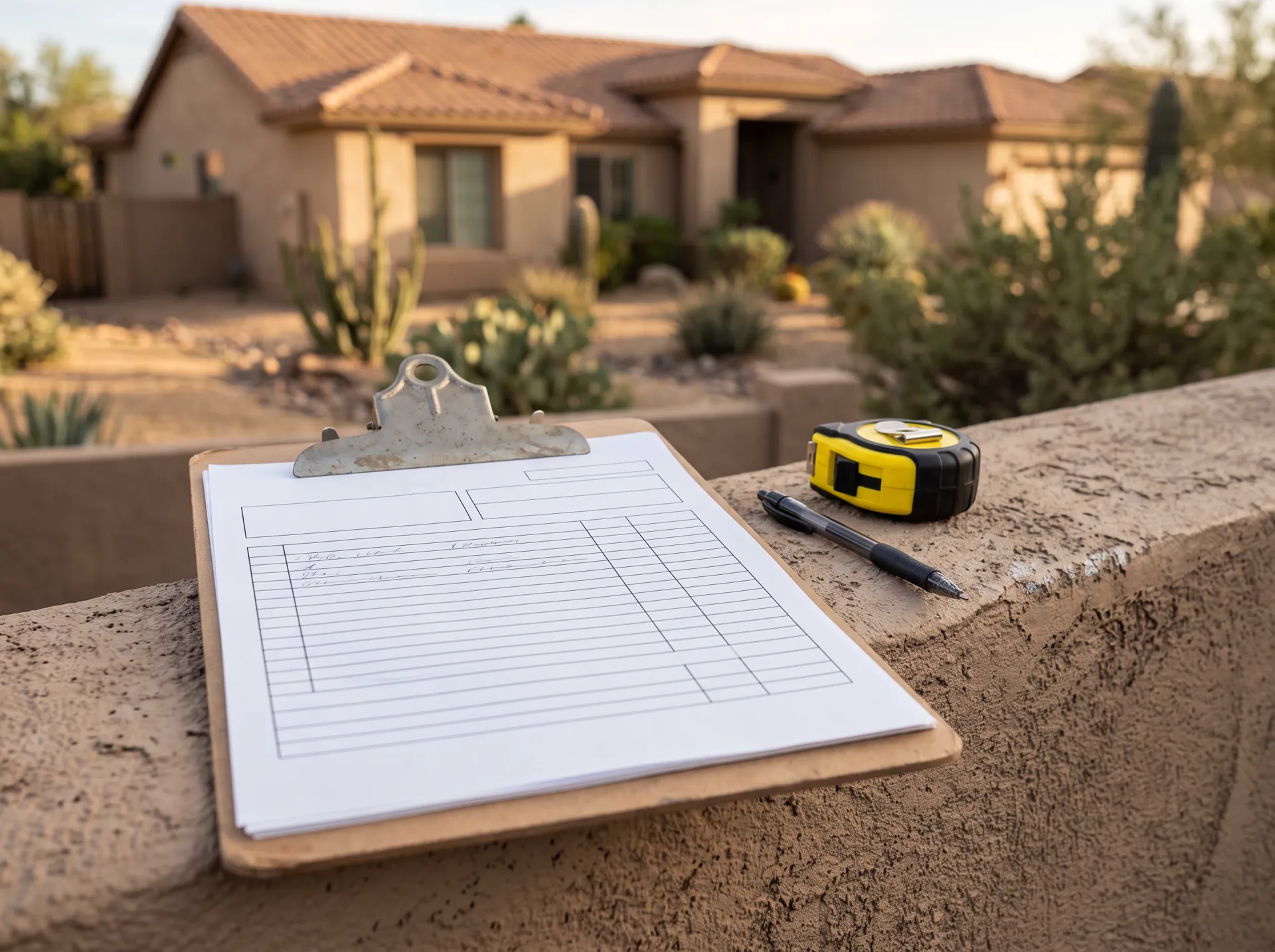
One thing first. Every number on this page is a national cost guide range, not a quote. These are not prices from Red Cliffs Stucco Co. or from any one contractor. Only a local crew that has seen your walls in person can give you a real number.
National cost guide ranges by job type
National cost guide ranges, not a quote.
- Small patch (a hole, a chip, a broken corner): about $200 to $600. See stucco repair.
- Most stucco repair jobs: about $600 to $3,000.
- Crack repair: often about $300 to $1,500, depending on length and cause. See stucco crack repair.
- Stucco inspection with moisture testing: often about $300 to $1,000 or more. Invasive testing, where small holes are drilled to read moisture inside the wall, costs more. See stucco water damage and inspection.
- EIFS repair: often about $1,000 to $5,000 or more for localized areas. See EIFS repair.
- Elastomeric coating or repainting a whole house: often about $3,000 to $8,000 or more. See stucco painting and elastomeric coating.
- Full restucco: often about $8 to $15 per square foot. National guides vary widely here. See stucco installation and restucco.
Your job may land below or above these ranges. That is normal. The sections below explain why.
What moves the price in Southern Utah
Height and parapets
A single story wall you can reach from a short ladder is the simple case. Two story homes, tall entry towers and flat roofs with parapet walls need scaffolding or roof access. Parapet caps are a common leak spot here, and fixing them often means working on the roof as well as the wall.
Texture and color match
Sand, lace, dash and smooth finishes are all common around St. George. Matching texture by hand takes skill. Color is harder still, because years of strong sun lighten stucco. A good match may mean tinting the patch, or painting the full wall so the repair does not show. More careful matching takes more time.
HOA color rules
If your HOA requires approved colors, the repair has to match that palette. Sometimes that means repainting a full wall or the whole house instead of touching up one spot. Ask your HOA what it requires before you compare prices, so every estimate covers the same thing.
Access on hillside lots
Many homes in the area sit on slopes, with walls that drop off toward a wash or a neighbor’s yard. Steep grades, retaining walls, tight side yards, pools and desert landscaping can make it hard to set ladders or scaffolding. Harder access adds labor.
Lath and paper condition
Behind the stucco is a layer of paper and wire lath. If the wire has rusted or the paper has torn, a surface patch will not last. Replacing those layers adds material and time, but skipping it usually means paying for the same repair again later.
Hidden water damage
This is the biggest unknown. A stain under a window or a soft spot near the ground may be a small surface issue, or it may mean the sheathing behind the wall is wet. Monsoon rain, cracked parapet caps and sprinklers that hit the base of the wall are common sources here. A crew may need to open the wall to find out, and the estimate should say what happens if they do.
Soil movement
Expansive blue clay and collapsible soils can shift a foundation, which shows up as cracks and gaps in the stucco. If the movement is still happening, a crack repair alone may not hold. A contractor may suggest you talk to a foundation specialist first.
How much of the house is involved
One wall is one job. Damage on several sides means more setup, more matching and more days on site.
Season and scheduling
Stucco cures best in mild weather. Work in peak summer heat or during monsoon storms can need extra steps, like shading walls or covering them. Spring and fall tend to be busy, so getting an estimate early helps.
How to compare estimates
The lowest number is not always the better deal. Put the estimates next to each other and check these points.
- Same scope. Does each one cover the same walls, the same cracks and the same areas? One may price a patch while another prices the full wall.
- The cause. Does the estimate say what caused the damage? A repair that ignores the cause tends to come back.
- Hidden damage. How does each contractor handle wet sheathing or bad lath if they find it once the wall is open? Is there a per square foot price for extra work?
- Texture, color and paint. Is the finish match included? Is paint or coating part of the price, and on how much of the wall?
- Access. Is scaffolding or roof work included for tall walls and parapets?
- Cleanup. Does the price include protecting plants, rock and pools, and hauling away debris?
- Timing and payment. When can they start, how long will it take and when is payment due? Be careful with anyone who wants the full amount before work begins.
- Detail. A single line with a total is not enough. Ask for more if that is all you get.
Questions to ask any contractor
- Will you look at the walls in person before giving me a price?
- What do you think caused this, and how does your repair deal with it?
- Will you check for moisture behind the damage?
- How will you match my texture and color, and will it meet my HOA’s rules?
- What happens if you find more damage once the wall is open?
- What is your Utah license number?
- Who will do the work, your own crew or a subcontractor?
- What do you put in writing about the repair after it is done?
Ask for the Utah license number
Ask any contractor for their Utah license number and look it up with the Utah Division of Professional Licensing (DOPL). Stucco work falls under the DOPL S270 and S230 classifications. The lookup takes a few minutes online and tells you what the license covers and whether it is active. Red Cliffs Stucco Co. does not check or vouch for any contractor’s license, so this step is up to you.
Waiting can cost more
Small stucco problems tend to grow. A crack that lets in a little water this monsoon season can become a soft, stained section next year. If a house sits empty for part of the year, damage can grow for months before anyone notices. Getting a look early usually keeps the job smaller.
Get a real number
Tell us what you’re seeing and we’ll get a team over for a free written estimate. Send a wide photo, a close photo and your town through the free estimate form, or text [435 NUMBER]. Curious how the request line works? Read about Red Cliffs Stucco Co.
Red Cliffs Stucco Co. connects Southern Utah property owners with independent local stucco contractors. Cost ranges on this page are national cost guide ranges, not a quote.