It’s easy to think water isn’t a problem in the desert. But stucco walls here get hit by monsoon downpours, soaked by sprinklers and drained by flat roofs, and the damage hides behind the finish until it’s well along. Finding where the water gets in is the whole job.
Tell us what you’re seeing and we’ll get a team over for a free written estimate.
Text us a photo at [435 NUMBER]
Signs to look for
Outside the house
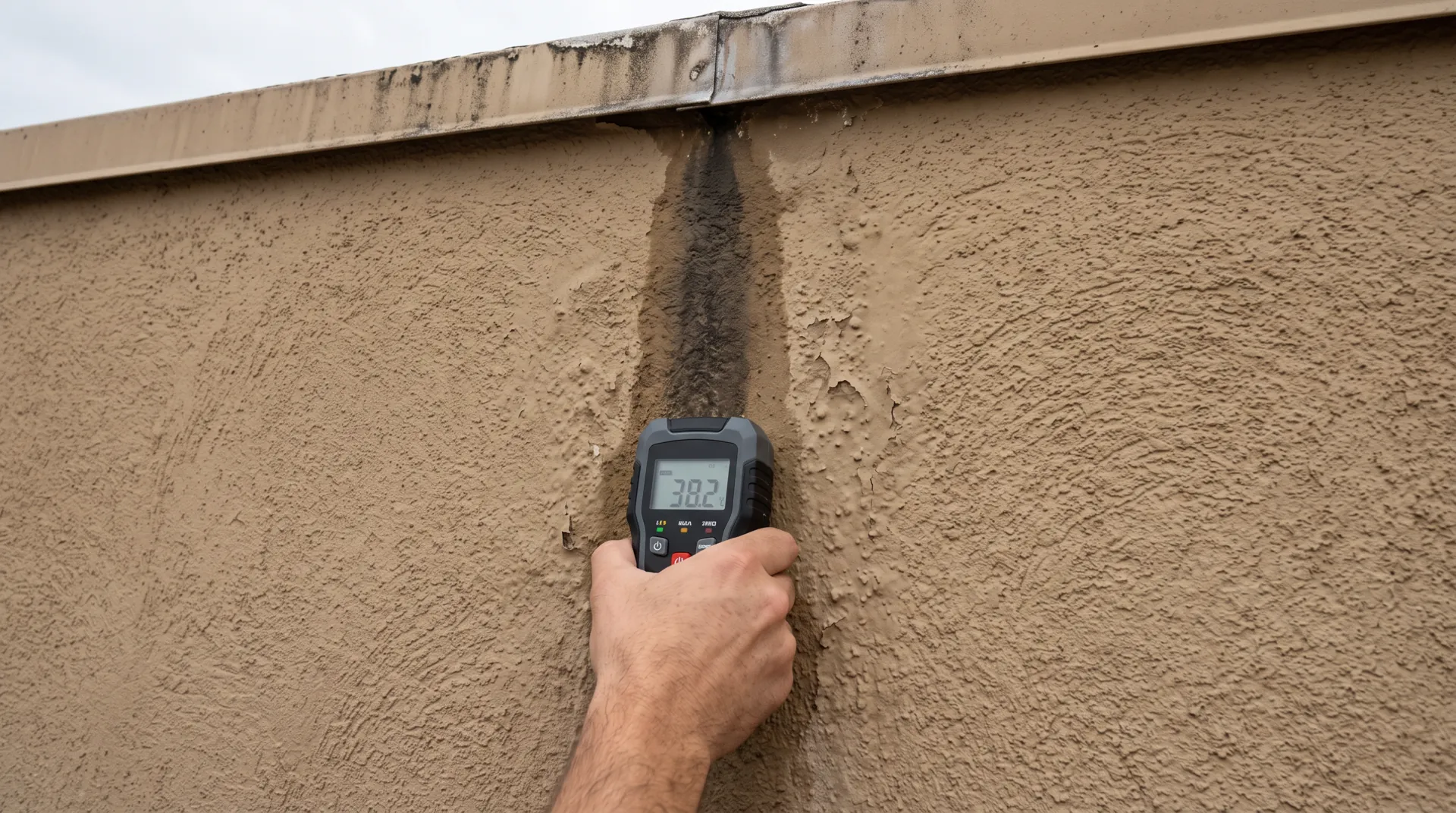
- Dark streaks or tea colored stains running down from windows, parapets or roof edges
- White, chalky crust (efflorescence) on the wall surface
- Paint that bubbles, blisters or peels in one area
- Soft, crumbly or spongy stucco when pressed
- Rusty stains or a corroded weep screed at the base of the wall
- Cracks that look damp or darker than the wall after rain
Inside the house
- Stains or soft drywall under windows or along exterior walls
- Swollen baseboards or window sills
- A musty smell in one room or closet
- Stains on the ceiling near a parapet wall
What usually causes it in Southern Utah
Parapet walls and flat roofs. Many Southern Utah homes have flat or low slope roof sections hidden behind parapets. The top of the parapet, the cap, is one of the most common leak spots. A hairline crack or failed seal up there sends water straight down inside the wall. Scuppers and roof drains that clog with dust and debris make it worse.
Windows and doors. Sealant around windows dries out and pulls away in the heat. If the flashing behind the stucco was missed or lapped wrong when the house was built, water gets behind the finish at every storm.
Sprinklers and irrigation. Spray heads hitting the wall every morning, and planters or drip lines against the foundation, keep the bottom of the stucco wet. Soil piled above the weep screed traps water so it can’t drain.
Monsoon storms. From about July to September, storms bring heavy rain and wind that pushes water sideways into small cracks and joints that stay dry the rest of the year.
Empty homes. Snowbird homes and second homes can sit through a whole monsoon season with nobody watching. A slow leak has months to spread before anyone notices.
Rushed construction. Some fast built homes have missing kick out flashing, blocked weep screeds or thin sealant joints. Those often show up as stains a few years in.
Moisture testing and inspections
You can’t see wet sheathing from the outside, so contractors use tools to check.
- Visual check: a walk around the house looking at stains, cracks, sealant, flashing, roof lines, parapet caps and drainage.
- Non invasive moisture meters: scanners that read moisture through the surface without making holes. Useful for spotting areas worth a closer look.
- Probe testing: small holes drilled at likely leak spots to measure moisture in the sheathing behind the stucco. The holes are sealed afterward. This gives much more reliable readings.
- A written report: where readings were high, what the likely entry points are, and what the contractor recommends.
Buying a stucco home?
A standard home inspection usually looks at stucco from the outside only. If you’re buying a stucco home in St. George, especially one with parapets, flat roof sections or visible staining, a separate stucco inspection with moisture testing during the contract period can show problems before you close. It’s also worth doing on a home that has been sitting empty, or a short term rental with a lot of guest turnover.
How the repair usually works
- Finds the source. The crew traces the water back to where it enters, whether that’s a parapet cap, a window corner, a roof to wall joint or the base of the wall.
- Opens the wall. Stucco is cut away around the wet area to see how far the damage goes.
- Repairs what’s behind it. Wet or rotted sheathing, framing, building paper and lath are replaced. This is where the real fix happens.
- Fixes the entry point. New flashing, parapet cap repair, fresh sealant or a cleared weep screed, so the same leak doesn’t come back.
- Rebuilds the stucco. Scratch, brown and finish coats go back on, with the texture matched to the rest of the wall.
- Seals and blends. Paint or elastomeric coating ties the repair in and adds a layer of protection.
If damage is spread across large areas of the house, patching may not make sense. See stucco installation and restucco.
Cost
National cost guide ranges, not a quote: a stucco inspection with moisture testing often runs about $300 to $1,000 or more, and invasive testing on a large house costs more. Repairs depend on what’s behind the wall. A localized fix may fall in the typical stucco repair range of about $600 to $3,000, while damage that reaches framing or covers several areas can run much higher. The stucco repair cost guide breaks this down.
When to act
- Right away: soft or crumbling stucco, stains inside the house, musty smells, or stains below a parapet.
- Before monsoon season: cracked parapet caps, dried out window sealant and cracks on storm facing walls.
- Before you buy: schedule a stucco inspection during your contract period.
- Before you leave for the season: if you head out for the summer, have someone check the walls and point sprinklers away from the house.
Related help
- Water getting in through cracks? See stucco crack repair.
- Soft spots on foam trim or accents? See EIFS repair.
- Holes or loose pieces? See stucco repair.
- In St. George? See stucco repair in St. George.
- In Ivins? See stucco repair in Ivins.
Stucco water damage FAQ
- Can stucco get water damage in a dry climate? Yes. Monsoon storms, sprinklers and flat roofs all put water on walls here.
- Will moisture testing leave holes? Probe testing uses small holes that get sealed. Scanner testing leaves none.
- Is a stain always a leak? Not always. Red dust and sprinkler minerals stain too. A moisture check tells the difference.
- Can I just paint over it? Paint can hide a stain, not stop the water. Find the source first.
- How do I check the contractor? Ask for their Utah license number and verify it with DOPL. Stucco falls under S270 and S230.
Send a photo of the stain or soft spot
Text a wide photo and a close photo to [435 NUMBER], or use the free estimate form. Buying a home? Mention the closing timeline. We’ll connect you with a local crew for a free written estimate.
Red Cliffs Stucco Co. connects Southern Utah property owners with independent local stucco contractors.